
The Truth About Synthetic Oils: 100% Synthetic vs. Hydrocracked 'Synthetic Technology'
Walk into any auto parts store and you'll find dozens of engine oils labeled "synthetic" or "synthetic technology." But these two terms describe very different products, and the distinction matters more than most drivers realize. Understanding what's inside the bottle helps you make a smarter choice — and better protect your engine.
What Does "100% Synthetic" Really Mean?
True 100% synthetic motor oils are built from base oils synthesized in a laboratory — primarily polyalphaolefins (PAO) or esters, classified as API Group IV and Group V base stocks. These molecules are engineered from scratch, giving them a perfectly uniform structure that performs consistently across a wide temperature range.
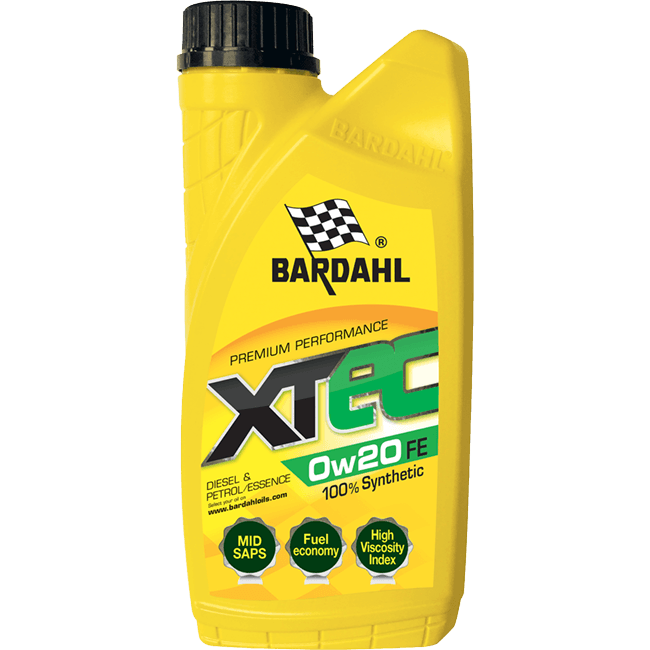
The result: excellent cold-start protection at -30°C, outstanding high-temperature stability, reduced oil consumption, and longer service intervals. PAO and ester molecules don't break down as easily under pressure and heat, meaning the oil continues to protect your engine even under the most demanding conditions. Bardahl's top-tier lubricant lines — including oils enriched with the brand's proprietary Fullerene C60 and Polar Plus technologies — are formulated on true synthetic base stocks to deliver exactly this level of protection.
What Is Hydrocracked "Synthetic Technology"?
Hydrocracked oils — officially API Group III base stocks — are refined mineral oils that have been processed at very high pressure and temperature to remove impurities and improve their molecular consistency. The end product is a high-quality mineral oil with properties that approach those of a synthetic.
The controversy? In many markets, including the EU, Group III oils can legally be marketed as "synthetic." Some manufacturers use terms like "synthetic technology," "semi-synthetic," or "synthetic-based" to describe them. These products are not the same as true PAO or ester synthetics, and their performance — especially in extreme temperatures or heavy-duty driving — doesn't always match up.
How to Choose the Right Oil for Your Engine
Choosing between oils doesn't have to be complicated. Here are the key things to look for:
- Check the base oil group: API Group IV or V = true synthetic. Group III = hydrocracked. This is often listed on the technical data sheet, not the front label.
- Match the viscosity grade: Whether it's 5W-30, 5W-40, or 0W-20, always follow your vehicle manufacturer's specification first.
- Look for performance certifications: ACEA, API, and OEM approvals (BMW Longlife, VW 504/507, MB 229.5, etc.) are non-negotiable for modern engines.
- Consider your driving conditions: City driving, highway commuting, track days, towing — each puts different demands on an oil. A true synthetic handles the extremes better.
- Don't be misled by marketing language: "Advanced synthetic," "full-synthetic formula," and "synthetic technology" don't all mean the same thing. Always read the data sheet.
When in doubt, consult your workshop or choose a trusted brand that publishes its technical documentation transparently. Bardahl makes its full range of product data sheets available, so you can verify exactly what you're putting in your engine before you buy.
Need the right Bardahl products?
Explore the range