
Why 80% of Bardahl's Range Is Built on PAO and Ester — Not Hydrocracked Base Oil
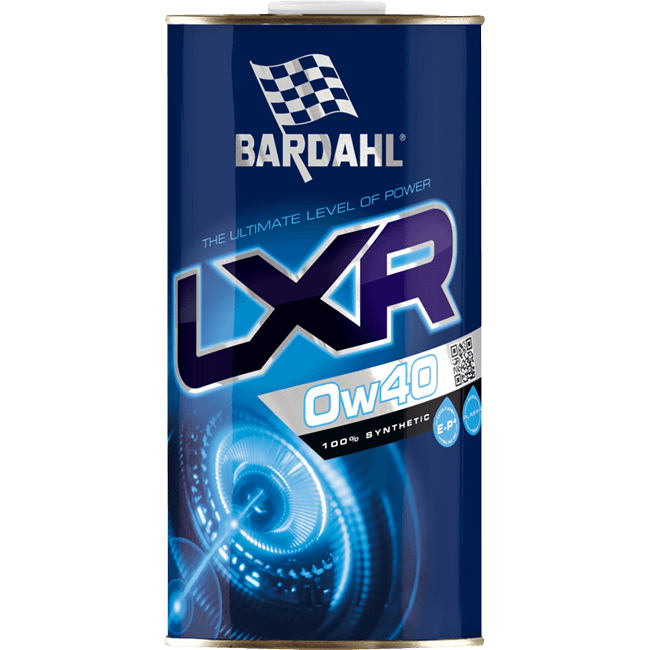
There is a chemistry lesson hiding behind the words "fully synthetic" that most oil labels never explain. In reality, there are several distinct categories of synthetic base oil — and they do not perform equally. Bardahl has formulated approximately 80% of its lubricant range on Group IV (PAO) and Group V (ester) base oils, the two categories that lubricant engineers unanimously recognise as genuinely synthetic. Understanding why that choice matters is the best way to evaluate any engine oil claim.
The Difference Between PAO/Ester and Hydrocracked Base Oils
The API (American Petroleum Institute) classifies base oils into five groups. Groups I through III are derived from crude oil — the most relevant for this discussion being Group III, produced by hydrocracking. Hydrocracking is an intensive refining process: crude-derived feedstock is subjected to high pressure and heat until the resulting fluid technically satisfies some regulatory definitions of "synthetic." The output is a genuinely capable lubricant, but its molecular structure is still descended from petroleum. Its viscosity index is lower, its thermal stability window is narrower, and it oxidises and degrades faster under sustained engine heat than a true synthetic.
Group IV (PAO — Polyalphaolefin) is a different matter entirely. PAO molecules are synthesised from ethylene — purpose-built rather than petroleum-derived. Their uniform, consistent structure produces outstanding stability from deep-cold starts down to −40°C all the way up to the thermal extremes generated inside a turbocharged engine. Group V esters are chemically built from organic acids and alcohols. What sets esters apart is polarity: they are electrically attracted to metal surfaces and form a tenacious boundary film even in the seconds immediately after a cold start, before the oil pump has built full hydrodynamic pressure. When Bardahl combines these two base types, the result covers both extreme-cold fluidity and extreme-heat durability simultaneously.
How This Translates to Real Engine Protection
In everyday driving — particularly under Greek conditions, with dense stop-and-go city traffic, summer ambient temperatures exceeding 40°C, and the demanding duty cycles of turbocharged petrol and diesel engines — the gap between a hydrocracked and a PAO/ester oil becomes measurable:
- Cold-start safety: PAO and ester oils maintain flowability at temperatures Group III oils begin to thicken, reaching bearings, cam lobes, and turbo shaft journals in the critical first seconds after ignition.
- Turbocharger durability: Turbo bearings routinely exceed 250–300°C. PAO/ester base oils sustain a protective film at temperatures where hydrocracked oils begin forming varnish and lacquer deposits on shaft journals.
- Extended drain intervals: Resistance to thermal oxidation means the oil retains its additive package and viscosity properties for longer, supporting the extended service intervals specified by modern OEMs.
- Engine cleanliness: True synthetic bases generate fewer oxidation by-products over time, keeping piston crowns, ring grooves, and oil galleries cleaner across hundreds of thousands of kilometres.
- Lower friction and fuel economy: The controlled molecular uniformity of PAO produces measurably lower internal fluid friction compared to hydrocracked alternatives, with a direct positive effect on fuel consumption.
How to Confirm You Are Getting True Synthetic
The label alone is not sufficient verification. Two straightforward checks give you real confidence:
- Download the Technical Data Sheet (TDS). Bardahl publishes full TDS documents for its entire range. A NOACK evaporation value below 8% is a strong indicator of Group IV/V base stocks — hydrocracked oils rarely achieve this without heavy thickening additives.
- Check for ACEA C2, C3, or A5/B5 approvals. These demanding European specifications for modern low-emission, turbocharged engines almost invariably require Group IV or V base oils to be met at the target viscosity grades. If the bottle carries one of these marks, the base oil chemistry is almost certainly PAO or ester.
Bardahl's commitment to Group IV and V base oils across 80% of its range is not a marketing position — it is an engineering decision reflected in the OEM approvals and ACEA certifications the products carry. For workshops and drivers in Greece who expect their lubricants to perform through summer heat, winter cold starts, and the constant demands of turbocharged engines, that underlying chemistry is the most important specification on the data sheet.
Need the right Bardahl products?
Explore the range