
The Truth About Synthetic Oils: 100% Synthetic vs. Hydrocracked Synthetic Technology
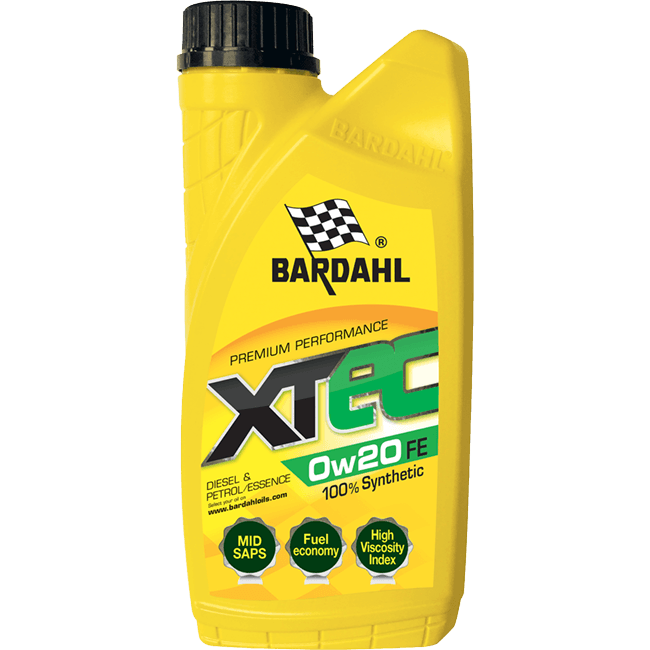
The word synthetic on a motor oil label sounds reassuring — but it can mean very different things depending on the product. Walk into any workshop supply store and you'll find oils labelled 100% Synthetic, Full Synthetic, and Synthetic Technology, often at very different price points. Understanding what's actually inside the bottle is the first step to making the right choice for your engine.
Two Very Different Products, One Shared Label
True 100% synthetic motor oils are built on Group IV base oils — known as PAO (polyalphaolefins) — and often enriched with Group V esters. These molecules are engineered in a laboratory, not derived from crude oil refining. The result: outstanding low-temperature flow at cold start, exceptional thermal stability, superior resistance to oxidation, and the ability to support extended drain intervals. Bardahl's Plasma range is built on this foundation — genuine PAO and ester chemistry designed for engines that demand the best.
Synthetic Technology (also called semi-synthetic or synthetic-based) uses Group III base oils: mineral oils subjected to intensive hydrocracking that removes most impurities and raises the viscosity index to 120 or above. These oils are significantly better than conventional mineral oil, but they are not the same as PAO or ester synthetics. A 1999 US court ruling allowed Group III to be marketed as synthetic, and the practice spread worldwide — creating the confusion drivers and workshops still face today.
Does the Difference Matter for Your Engine?
Yes — but the answer depends on your vehicle. The performance gap between Group III and Group IV/V is most relevant under demanding conditions:
- Turbocharged and direct-injection engines — the turbo runs at extreme temperatures; PAO/ester oils resist coking and bearing deposits far better than Group III.
- High-revving performance engines — tighter tolerances demand a film that holds up under high shear forces across the full temperature range.
- Vehicles with extended factory service intervals — only a true 100% synthetic formulation maintains its protection over those longer gaps.
- Cold climates or frequent short trips — PAO-based oils flow faster at startup, reducing wear during those critical first seconds of every journey.
For many standard petrol and diesel engines running on normal service schedules, a quality Synthetic Technology product that meets the manufacturer's ACEA or API specification is a perfectly legitimate, cost-effective choice. The approval code on the label carries at least as much weight as the base oil type.
A Practical Guide to Choosing the Right Oil
- Start with your owner's manual: check the required viscosity grade (e.g. 5W-40, 0W-20) and OEM approvals (ACEA C3, API SP, BMW Longlife-04, VW 504.00, etc.).
- If your engine is turbocharged, performance-oriented, or runs under high thermal stress, choose a 100% synthetic (PAO/ester) formulation.
- Synthetic Technology is a valid option for many everyday engines — provided it carries the correct OEM approvals for your vehicle.
- Never extend drain intervals beyond factory recommendations unless your oil is explicitly rated for longer-life use.
- When in doubt, ask your workshop — or use the Bardahl product guide to find the right specification for your exact vehicle.
The takeaway: synthetic is not a single standard. Knowing whether a product contains PAO, esters, or hydrocracked Group III gives you the information you need to match the right oil to your engine — and protect your investment for the long run.
Need the right Bardahl products?
Explore the range