
How Often Should You Really Change Your Oil — And Why Full Synthetic Lasts Longer
The advice has been repeated for decades: change your oil every 5,000 kilometres. But this rule was written for a different era — for mineral oils and engines built with tolerances that have since improved dramatically. If you are still changing at 5,000 km without a second thought, you may be spending more than necessary. And if you are stretching an overdue interval assuming all oils are the same, you may be shortchanging your engine.
Where the "Every 5,000 km" Rule Came From
Mineral-based oils, which dominated the market until the 1990s, degrade relatively quickly. Heat, oxidation, and combustion byproducts break down the oil's lubricating properties within a few thousand kilometres. Engines of that era also tolerated more internal contamination. The conservative 5,000 km interval made perfect sense — back then.
Modern engines are built to tighter tolerances, run hotter and more efficiently, and are designed around the properties of synthetic lubricants. The old rule simply does not apply the same way.
Why Full Synthetic Oil Lasts Significantly Longer
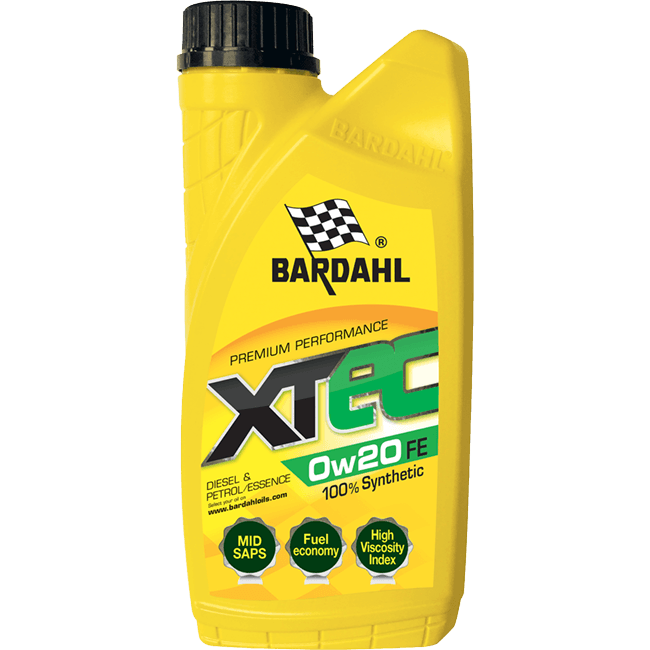
The key difference is molecular structure. Full synthetic oils — like those in the Bardahl XTECH range — are engineered at a molecular level, rather than refined from crude oil. This gives them several critical advantages:
- Thermal stability: They resist breakdown at high temperatures far better than mineral or semi-synthetic oils.
- Oxidation resistance: Synthetic molecules are far less reactive with oxygen, so the oil stays effective for longer.
- Cleaner engine internals: Full synthetics carry fewer impurities and prevent deposits from forming on pistons, rings, and valvetrain components.
- Cold-start protection: They flow faster at low temperatures, protecting the engine in the critical first seconds after ignition — when most wear actually occurs.
A quality full-synthetic oil can comfortably last 10,000 to 15,000 kilometres under normal driving conditions — sometimes more, depending on the specific product and your vehicle manufacturer's recommendation.
Practical Tips: When to Change, and When to Wait
There is no single answer that works for every driver. Your actual interval should take the following into account:
- Follow your manufacturer's specification first. Your service manual lists the recommended interval and oil spec (e.g., 0W-30, 5W-40). This is your baseline.
- Consider your driving conditions. Frequent short trips, heavy city traffic, and cold starts all stress the oil more than long motorway drives.
- Check your oil level monthly. Even the best synthetic oil can be consumed over time. A low oil level is more damaging than a slightly overdue change.
- Use the right product for your engine. A full-synthetic like Bardahl XTECH 5W-40 or 0W-30, formulated to meet OEM approvals, ensures you get the extended protection the interval was designed around.
The bottom line: with a quality full-synthetic oil in a modern engine and your manufacturer's guidance, an interval of 10,000–12,000 km is typically both sufficient and economical. If you are still using conventional oil or have an older, high-mileage engine, stay closer to 5,000–7,500 km. When in doubt, ask your workshop to recommend the right Bardahl product for your vehicle — the right oil at the right interval saves money, reduces waste, and keeps your engine running longer.
Need the right Bardahl products?
Explore the range