
Oil Additives Explained: What Detergents, Anti-Wear Agents and Dispersants Really Do
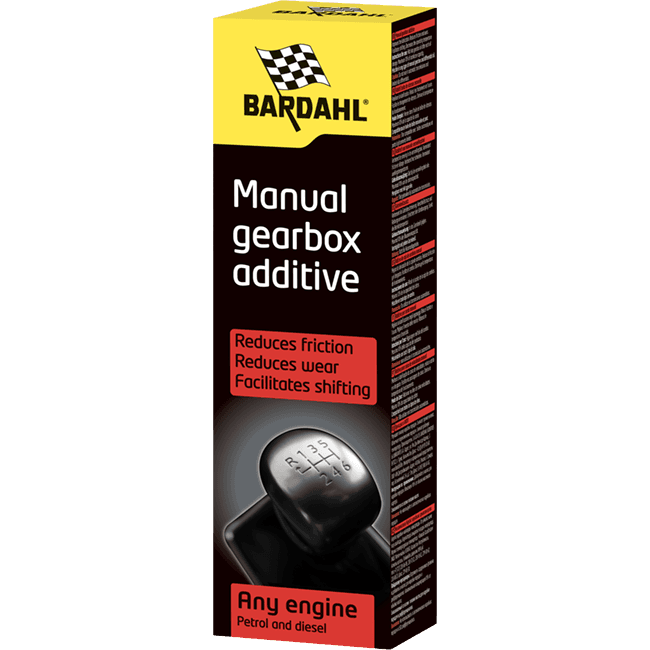
Most drivers think of engine oil as one thing — a liquid that lubricates moving parts. In reality, modern engine oil is a carefully engineered blend where up to 20–25% of the volume consists of chemical additives. Those additives are often what separates a truly protective oil from one that simply meets the viscosity grade on the label. Three additive families do the heaviest lifting: detergents, anti-wear agents, and dispersants.
Detergents: Keeping Metal Surfaces Clean Under Heat
Engine combustion generates acids, sulfur compounds, and carbon deposits that coat piston rings, cylinder walls, and oil galleries. Detergent additives neutralize these acids and continuously clean combustion byproducts off hot metal surfaces. Without them, varnish and lacquer build up on pistons, restricting ring movement and eventually causing oil consumption and power loss.
Modern engine oil detergents are typically metallic salts — calcium and magnesium sulfonates or phenates. Premium oils use over-based detergents, which carry an alkalinity reserve expressed as Total Base Number (TBN). A higher TBN means the oil can neutralize more acid before becoming ineffective. This is one of the main reasons a quality full-synthetic outlasts a conventional oil between changes: it starts with a larger alkalinity reserve and depletes it more slowly.
Anti-Wear Additives: Protection When the Oil Film Breaks Down
Under extreme conditions — cold starts, sustained high RPM, heavily loaded valve trains — the hydrodynamic oil film between metal surfaces can momentarily thin or break down entirely. This is where anti-wear (AW) additives become critical. The most common is ZDDP (zinc dialkyldithiophosphate), which chemically reacts with metal surfaces under heat and pressure to form a sacrificial protective tribofilm. When metal-to-metal contact occurs, the ZDDP film wears rather than the engine components themselves.
Oils with well-balanced anti-wear packages — such as Bardahl's full-synthetic range and Plasma technology — are engineered to deliver this protection across a wide range of operating conditions, from cold winter mornings to summer mountain driving. When choosing an oil, always verify it meets your engine manufacturer's specification (e.g., API SN Plus, ACEA A3/B4, VW 504.00), not just the viscosity grade.
- Check your owner's manual for the required OEM specification, not only the viscosity (e.g., 5W-40).
- High-performance or older engines may require oils with higher ZDDP levels — ask your workshop before switching brands.
- Turbocharged engines are especially sensitive to anti-wear performance; oil degradation accelerates under turbo heat cycles.
Dispersants: Preventing Sludge Before It Forms
Dispersants work hand-in-hand with detergents, but their role is distinct: while detergents clean metal surfaces, dispersants keep contamination particles suspended in the oil so they travel to the filter rather than clumping together. Every engine — especially diesels and vehicles driven on short urban trips where the engine never fully warms up — produces soot, partially burned fuel, and moisture. Without dispersants, these particles coagulate into abrasive sludge that wears bearings and clogs narrow oil passages.
Dispersant chemistry (typically ashless polyisobutenyl succinimides) works by coating contaminant particles and preventing them from bonding to each other or to metal surfaces. Like all additives, dispersants are consumed over time — their effectiveness declines as they become saturated with contaminants. This is why oil change intervals exist regardless of whether the base oil has physically degraded: the additive package needs to be refreshed.
Understanding what is inside your engine oil helps you make better decisions at every service interval. Viscosity is visible on the label — but the quality of detergents, anti-wear agents, and dispersants is what truly determines how well your engine is protected. Whether you run a modern turbocharged engine, a diesel workhorse, or a performance motorcycle, Bardahl formulates its full range with high-performance additive chemistry designed for Greece's demanding conditions: urban stop-and-go, summer heat, and mountain roads.
Need the right Bardahl products?
Explore the range