
Oil Additives Explained: What Detergents, Dispersants and Anti-Wear Agents Actually Do
Most drivers know they need to change their engine oil. Fewer know what's actually in it. Beyond the base oil itself, up to 25% of a high-quality motor oil consists of additives — chemical compounds that protect, clean, and extend the life of your engine. Understanding what these additives do helps you choose the right oil and appreciate why premium formulations consistently outperform cheaper alternatives.
Detergents: Neutralizing Acids Before They Attack
Engine oil detergents don't work like dish soap. Their real job is to neutralize acidic combustion by-products — sulfur compounds, nitrogen oxides, and partially burned fuel — before those acids can corrode cylinder walls and bearing surfaces. Detergents also prevent carbon and varnish deposits from forming on pistons and in the combustion chamber. An engine running oil with quality detergent chemistry stays cleaner internally, maintains better compression, and burns fuel more efficiently over time.
This matters especially in Greek driving conditions, where stop-and-go city traffic and summer heat push oil to its working temperature fast — exactly when detergent chemistry earns its keep.
Dispersants: Keeping Contaminants Suspended
While detergents neutralize acids, dispersants tackle a different enemy: soot, carbon particles, and insoluble combustion residues. A dispersant molecule surrounds these particles and holds them suspended in the oil, preventing them from clumping into sludge that blocks oil galleries, clogs filters prematurely, and starves engine components of lubrication.
- Black oil is healthy oil. If your oil turns dark quickly, the dispersants are working — holding contaminants in suspension rather than letting them settle.
- Oil that stays golden for too long may not have adequate dispersant chemistry for your engine's real demands.
- Dispersants deplete with time. Exceeding recommended drain intervals leaves your engine with exhausted dispersants and no real protection against sludge buildup.
Anti-Wear Additives: The Last Line of Defense
Even the best base oil cannot eliminate metal-to-metal contact under extreme pressure. Anti-wear additives — primarily ZDDP (zinc dialkyldithiophosphate) — form a thin sacrificial film on critical metal surfaces. Under high pressure, this film shears before the metal does, absorbing punishment and protecting engine components. Anti-wear protection is most critical during cold starts, before full oil pressure builds, and under high-load conditions like motorway overtaking or mountain driving.
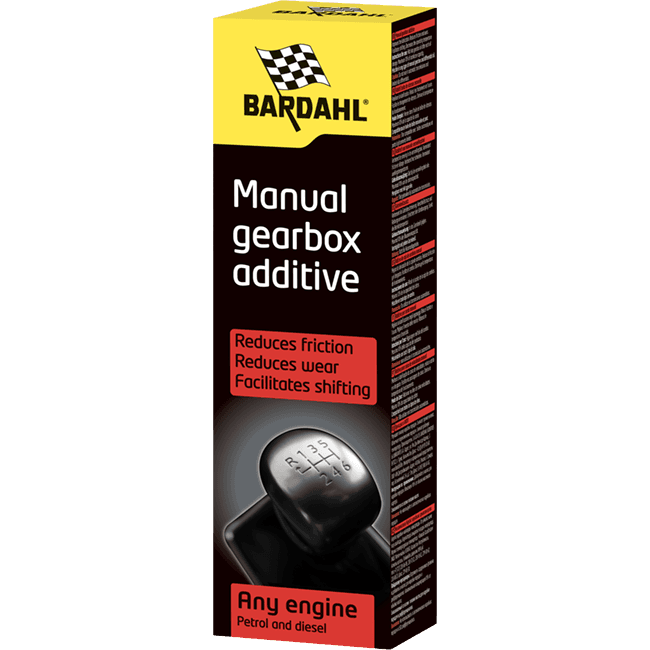
Bardahl's formulations include Polar Plus technology, which bonds oil molecules to metal surfaces even when the engine is off. That means a protective film is already in place from the very first revolution — before oil pressure has even built up.
A few practical tips when choosing and using engine oil:
- Always match the viscosity grade and specification (ACEA, API, OEM approval) to your vehicle's owner's manual.
- Never skip the oil filter — sludge trapped in a dirty filter negates the benefits of fresh oil.
- Unusual engine noise at cold start often signals depleted anti-wear additives.
- Respect drain intervals — additives have a finite lifespan, even in full-synthetic oils.
The base oil carries the load; the additive package does the protecting. For Greek roads and Greek weather — from Athenian congestion to alpine passes in the north — choosing an oil with the right additive chemistry is not a luxury. It's what keeps your engine running for the long haul.
Need the right Bardahl products?
Explore the range