
How Often Should You Really Change Your Oil — And Why 100% Synthetic Lasts Longer
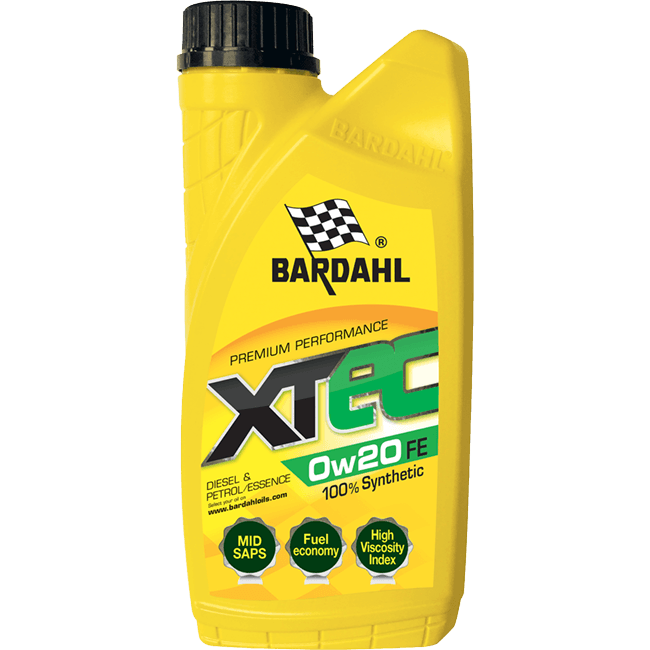
For decades, workshops repeated the same advice: change your oil every 5,000 kilometres. It made sense when cars ran on mineral oils and engines were less refined. Today, that rule can actually cost you money — and may not even be protecting your engine as well as you think. Here's what actually matters when it comes to oil change intervals, and why 100% synthetic oil changes the equation entirely.
Why the Old 5,000 km Rule Is Outdated
The 5,000 km interval was designed around conventional mineral oil, which degrades relatively quickly under heat, oxidation, and mechanical stress. Modern engines — especially turbocharged and high-output units — run hotter and at tighter tolerances. Conventional oil simply wasn't engineered to keep pace.
Most vehicle manufacturers today specify 10,000 to 20,000 km intervals for cars using the correct grade of synthetic lubricant, as confirmed in the owner's manual. Following the 5,000 km rule on a modern synthetic-filled engine doesn't protect you more — it just empties your wallet faster.
What Actually Determines Your Oil Change Interval
Several real-world factors shape how long your oil remains effective:
- Driving conditions: Short city trips are harder on oil than long motorway runs. The engine never fully reaches operating temperature, leading to fuel dilution and moisture buildup.
- Engine type: Turbocharged, diesel, and high-performance engines stress oil more. Check the manufacturer's severe-service interval if you regularly drive this way.
- Oil quality: The difference between mineral, semi-synthetic, and 100% full synthetic is not just marketing — it's chemistry. Full synthetic base stocks resist breakdown far longer.
- Oil consumption: If your engine burns oil between changes, top up and inspect more frequently — never let the level drop below minimum.
Why 100% Synthetic Lasts Longer — And What to Look For
100% synthetic oil is built from engineered base stocks — Group IV PAOs or Group V esters — rather than refined crude. The molecules are uniform in size, thermally stable, and highly resistant to oxidation, which is the primary cause of oil degradation.
In practice, a quality full synthetic maintains its protective viscosity film much longer than mineral or semi-synthetic oil. It also performs better at cold starts — the moment when most engine wear actually occurs — because it reaches critical surfaces faster.
Bardahl's Plasma range, for example, combines 100% synthetic technology with the brand's proprietary Polar Plus and C60 Fullerene additives. These additives form a molecular protective layer on metal surfaces, reducing friction even when the oil film is thinnest — such as during startup or under sudden load increases.
When choosing a full synthetic, match the viscosity grade to your manufacturer's specification — commonly 5W-40, 5W-30, or 0W-20 for modern engines. A high-quality full synthetic, changed at the interval your owner's manual specifies, is the most cost-effective protection you can give your engine.
Practical Checklist: Getting Your Oil Change Right
- Always follow the manufacturer's recommended interval — it's in the owner's manual, not on a garage sticker
- Use the correct viscosity grade and API/ACEA specification for your engine
- Change the oil filter every time you change the oil
- Check your oil level every 2,000–3,000 km — full synthetic can still be consumed
- If you do a lot of city driving or short trips, consider shortening the interval slightly, even with full synthetic
- If in doubt, ask a trusted workshop to check the oil's colour and consistency
The bottom line: modern full synthetic oil, used correctly, genuinely does last longer — but longer still means following your manufacturer's guidelines, not skipping changes indefinitely. Invest in quality oil, change it on schedule, and your engine will thank you for it.
Need the right Bardahl products?
Explore the range