
Cold Start Wear: The 30 Seconds That Age Your Engine — and How Polar Plus Stops It
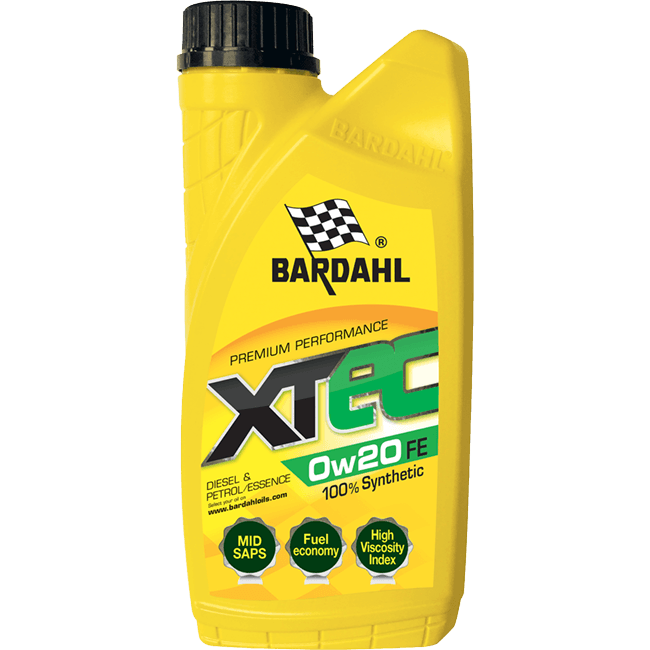
The moment you turn the key, something most drivers never consider begins to unfold inside the engine. Before oil pressure has built up, before the pump has delivered a single drop to the camshaft bearings, metal is already sliding against metal. This window — often just 10 to 30 seconds — is responsible for a disproportionately large share of total engine wear over a vehicle's lifetime. Polar Plus technology, developed and refined by Bardahl over decades, was designed specifically to close this gap.
What Really Happens Inside the Engine at Startup
When an engine sits idle — even overnight — gravity quietly does its work. The oil film that coats every moving component during normal running slowly drains back into the sump. By the time you start the car in the morning, most of that protective layer is gone. The oil pump needs several seconds to build pressure and push fresh oil through the galleries: up to the cylinder head, along the camshaft, and out to each bearing journal. During those seconds, surfaces run with minimal lubrication.
Cold weather makes the problem significantly worse. Lower temperatures increase oil viscosity — thicker oil moves more slowly through narrow passages, extending the unprotected window. In practice, cold-start wear can account for as much as 75% of total engine wear over the life of an engine. This is not a marginal concern: it is the single biggest factor in long-term engine health.
How Polar Plus Keeps Oil Bonded to Metal
The principle behind Polar Plus is rooted in electrochemistry. Bardahl's additive formulas include polar molecules — compounds whose structure gives them a natural electrical charge at one end. This charge creates an attraction to the iron and steel surfaces inside the engine, similar to the way a magnet is drawn to metal.
This attraction is not passive. As long as the oil is in contact with engine components, these polar molecules orient themselves perpendicular to the metal surface and form a dense, tightly bonded layer — a microscopic film anchored directly onto the metal itself. When the engine is switched off and most of the oil drains back to the sump, this layer stays in place. It cannot simply drain away, because it is held to the surface by the same electrostatic force that put it there.
At the next cold start, every critical surface — cylinder walls, piston rings, cam lobes, crankshaft bearings — is already coated and protected. The oil pump still performs its essential role, but the most vulnerable window is covered without depending on it.
Practical Steps for Better Cold-Start Protection
Understanding the science changes what good maintenance looks like in practice. Here is what every driver and workshop should keep in mind:
- Choose the right viscosity for your region and season. In northern Greece or at altitude, a 5W-40 or 0W-40 full synthetic reaches critical surfaces far faster than a 10W-40 mineral oil. The number before the "W" indicates cold-temperature flow — lower means faster.
- Give the engine 20–30 seconds at idle after a cold start. Even with a Polar Plus film already in place, idle time allows full oil pressure to develop and reach every corner of the engine before you drive away.
- Change oil on schedule — don't stretch the interval. Polar additives are gradually consumed as the oil ages. A fresh fill with Bardahl restores the bonded film and full additive protection from the first startup.
- For workshops: consider an engine flush on high-mileage engines. Accumulated deposits on metal surfaces reduce how effectively polar molecules can bond to them. Starting clean means the additive package works at maximum efficiency from day one.
- Check oil level regularly. Low oil volume means the protective layer is rebuilt more slowly after every startup — don't give wear a head start.
Bardahl has been developing and refining polar additive chemistry for over 80 years. What distinguishes Polar Plus is not just the concept, but the formulation's durability, its performance range from cold starts to extreme operating temperatures, and its compatibility with the tightest modern engine specifications. For drivers who want their engines to last, and for workshops who take long-term engine health seriously, it is the science behind every Bardahl recommendation.
Need the right Bardahl products?
Explore the range